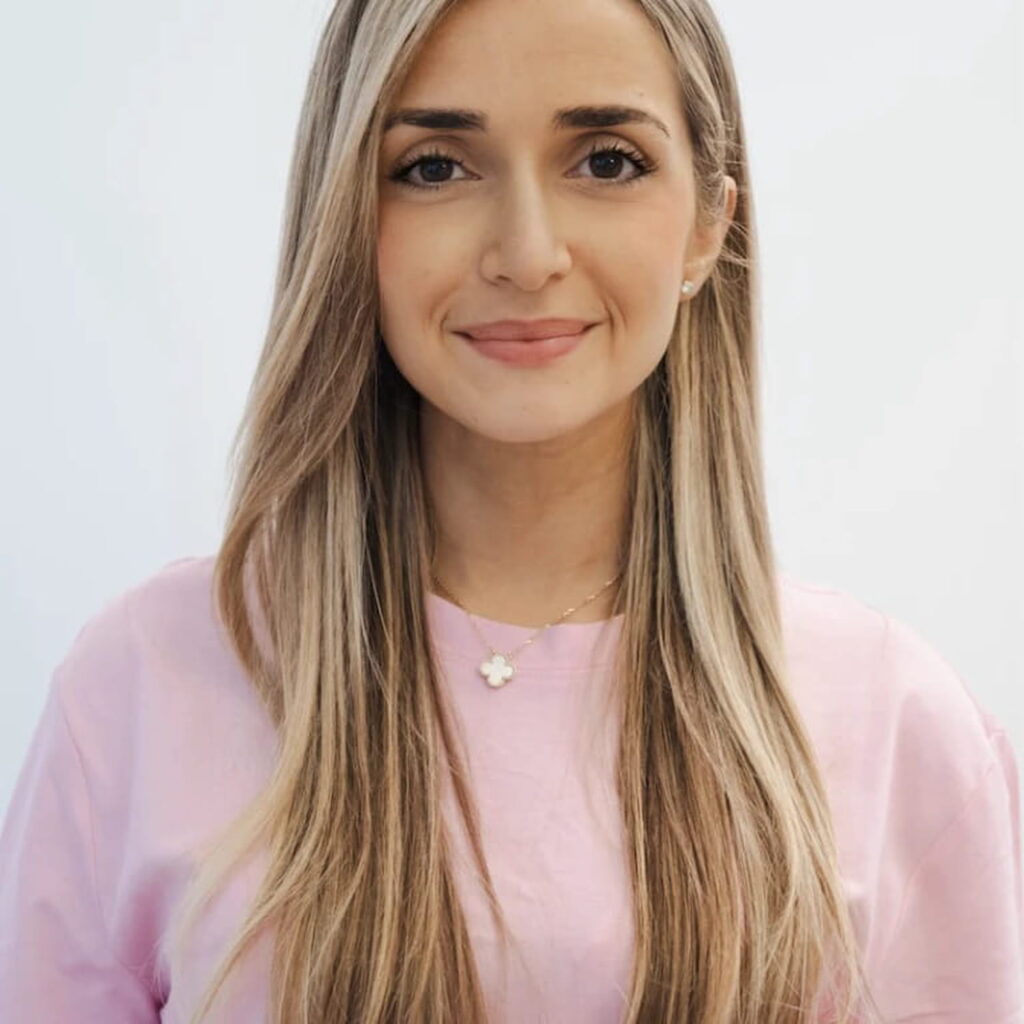
Igor Carron is the CEO and co-founder of LightOn. He returns to the JDN on the company’s strategy one year after the IPO in November 2024.
JDN. LightOn has now been on Euronext Growth Paris for 12 months. Is the outcome of the IPO positive according to your criteria?
Igor Carrón. What particularly struck us was the strong presence of individual investors, an element that distinguished us from previous IPOs. Portzamparc, our investment bank, has confirmed this. For me, the challenge of developing generative AI with broader support was relevant. The majority of people remain spectators, while the numbers continue to be impressive. I perceived a real need: to allow some of the carriers to participate in this adventure which will redesign the way we work. Individuals have shown a form of confidence on this subject. To answer your question directly, yes, I think it was, and remains, a good strategy.
In 12 months, the stock has lost more than half its price. How do you explain this significant drop?
The situation is quite complex. From LightOn’s point of view, I don’t have a precise explanation for the drop in price. It is important to be clear: moving from an unlisted company to a listed company fundamentally changes our relationship to communication. It’s not just a question of reporting or administrative forms. It is above all a question of truth.
“When I hear questions about LightOn, I remind my interlocutors of the unprecedented transparency of our communication”
Previously, we were used to working with accountants and auditors. Now everything is done in real time. When I hear questions about LightOn, I remind my interlocutors of the unprecedented transparency of our communication. We offer total openness, allowing all stakeholders to follow live what is happening in the company. This is radically different from the usual practices of unlisted companies, which traditionally seek to preserve their confidentiality.
The reality is that, in the unquoted, many can make speeches with various intentions, far from reality. We are an open book, a barometer of the use of generative AI in France, Europe and beyond.
Even if your turnover increases by 15% in your latest results, you have adjusted your recurring revenue forecast downwards. Should this be seen as a direct effect of the national context and the slowdown in public procurement, on which your income largely depends?
That’s a very good question. I’m not going to get into the political debate, that doesn’t interest me. I’ll be very clear: I don’t watch television, I don’t listen to the radio. Sometimes I notice that a minister has been replaced, but I don’t even know who. I already have enough to do with the fact that our sector changes every fortnight.
On the other hand, what we also observe is a sort of shift. This is why we were talking about revising ARR. We built this metric into our IPO to show that there was recurring revenue, to demonstrate that these businesses are not a “one-shot.” As for the French public sector, what we observe is that there is competition, like everywhere, no worries about that. The reality is that until recently there was no clarity on how to manage information and GPUs. There weren’t many providers that achieved a certain level of security, because the GPUs weren’t necessarily hosted there. There was really a shift in GPUs which meant that prices always remained a little high, which placed part of the State in a wait-and-see position before making decisions, while the technology itself is potentially much simpler.
Unlike a start-up like Mistral, you must deal with the transparency imposed by the financial markets, even though artificial intelligence requires significant investments and a high risk tolerance. Doesn’t this exposure limit your agility or your ability to invest in line with the sector’s ambitions?
Some people find this mode of operation complicated? I confirm to them that it is indeed more complex. But our approach is distinguished by unparalleled transparency. Finally, the question of investments deserves to be nuanced. Many start-ups raise funds to develop models, in the hope of being acquired. This is not our intention. We want to equip the world with technology as revolutionary as writing 6,000 years ago, with the capacity to produce innovations at the level of Chinese or American AI laboratories. We don’t need to invest heavily in GPUs. Our strength is to create innovative technological building blocks, such as our OCR or our work on RAG, which go beyond current trends.
“Certainly, raising a lot of money can benefit notoriety, but we are pursuing a different goal.”
Our goal is the effective transformation of businesses. We identify technological gaps and fill them. Take our “late interaction models”: technologies that enrich business documents to facilitate decision-making. Currently, employees waste nearly 9 hours per week searching for documents. This is absurd, and our technology is here to change that. Of course, raising a lot of money can benefit notoriety, but we are pursuing a different goal. It is important to distinguish actors who seek visibility from those who, like us, aim for a real impact.
You have turned the page from FORGE to switch to a SaaS model. This type of pivot often reflects an admission of failure. What triggered this choice, and what lessons do you learn from it today?
In 2023, we saw a significant turning point in our strategy. The technological landscape has radically changed: American and Chinese laboratories are capable of investing massively, multiplying their development capacities by 10 or 100. We quickly realized that we did not have the financial means to compete and that it would be difficult to find customers willing to support such investments. This is where our opportunism comes in: recognizing these developments in real time, not two years later, and imagining the next stage.
Our goal is now to become the “last mile” of this technology, we who were the pioneers. Our transformation to a SaaS model reflects our ability to adapt. I compare this development to the history of aviation. Like the aircraft manufacturers of the 1900s who moved from two-seaters to transport planes, we are seeking to expand our economic model.
Are you looking today to strengthen your presence in certain segments, or to open new markets?
We are extremely opportunistic, in a good way. Our history demonstrates our desire to satisfy all our shareholders by exploring diversified markets. Our main target concerns companies which, by default, cannot use existing technologies, in particular due to regulatory constraints. For companies operating in regulated sectors – defense, health, banking, insurance, having internal generative artificial intelligence becomes a strategic asset. It is about being able to attract and retain the best talents by offering them effective tools, allowing them to build competitive use cases on an international scale. We specifically target these actors who cannot use tools subject to foreign legislation. We even operate in highly secure environments, where physical access is restricted.
You have experienced strong growth in your workforce, going from around 30 to 50 employees. Are you able to maintain your agility and a start-up culture, even though structuring a larger team often requires more processes?
Traditionally, the growth of a business is accompanied by a more complex interaction, with communication that quickly becomes exponential. Our goal is to reduce this complexity. We use generative artificial intelligence to give more autonomy to our different groups, allowing them to obtain information without increasing interactions. For me, this is the organizational model of the future: more agile companies where each department can interact directly with a system that concentrates the company’s knowledge.
We take some inspiration from the Amazon model and the concept of internal API developed by Jeff Bezos, where each department can access the data it needs without bureaucratic procedures. With 50 employees, we must maintain this fluidity. Generative AI helps us stay agile, reducing the need for traditional communication. It’s quite paradoxical: we sell technology while using it to make ourselves more efficient.
The French ecosystem is becoming ultra-competitive, particularly with Mistral which occupies a central place. Doesn’t this increased competition complicate your positioning on the market?
This competition makes me think of the history of Pathé and Gaumont. France has often been perceived in a melancholy way, but our history shows that “enemy brothers” can build an industry together. In 1898, in Paris, the first economic model of cinema was born. These competitors who competed against each other for decades ultimately contributed to Hollywood’s success.
Our ecosystem is precisely in this logic. I am not going to denigrate Mistral, but I will always advocate for our solution. The important thing is to try the products, to give each innovation a chance. Yes, we are losing engineers who are leaving for Mistral, OpenAI. It pains me, but the reality is that some stay at LightOn, attracted by our vision: to advance this technology in the public sector and businesses. Our competitiveness lies in our ability to work together, to build a strong French ecosystem. This is our true strength.