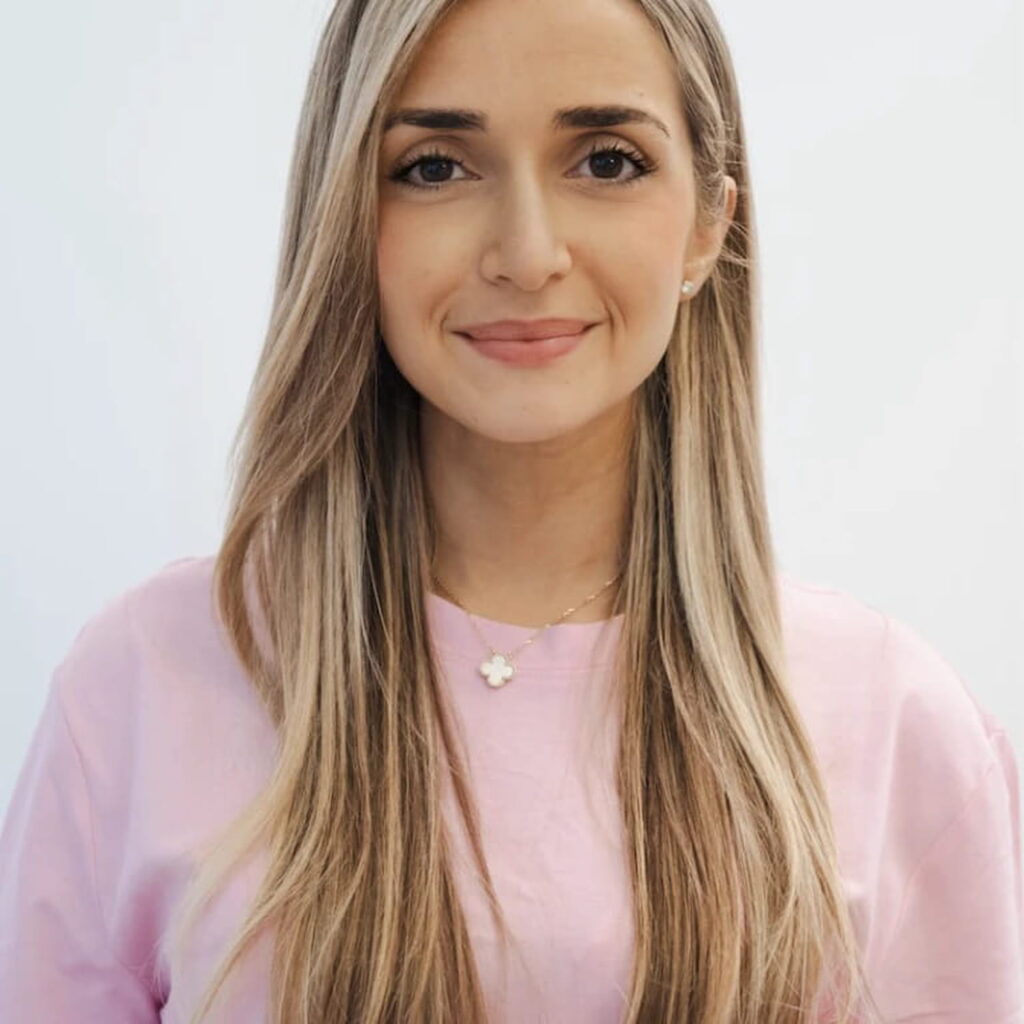
With Claude, Anthropic puts on a proactive AI, focused on cases of specific uses. The JDN met Mike Krieger, Chief Product Officer of the company, also co -founder of Instagram, to understand this strategy.
Jdn. Why did you choose to focus only on the text with Claude, when your competitors like Chatgpt or Gemini already integrate the image or the video?
Mike Krieger. We choose to remain very focused, to aim for excellence on some key uses rather than being average on many. With Claude, our priority is that he knows how to write well, show creativity, reason and act as an agent, and code effectively. These are the main axes on which our research teams are concentrated. Regarding image or video, we prefer to establish partnerships with specialized start-ups. You might imagine, ultimately, ask Claude via our site to create an image and that it be generated by a partner’s technology. We are not planning to develop such abilities internally in the near future.
Do you have concrete examples of agents deployed today?
At Anthropic, we have developed several internal agents. One of them detects the bugs on our site and then checks if it can solve them alone, identifies the source of the problem, and calls on a human if necessary. As said before, this is not the automation of a profession as a whole, but rather a very specific task. Our partnership with Intercom is another example. This company specializing in customer support has created an agent, baptized at the end, dedicated to customer service, fueled by Claude, capable not only to answer questions, but also to diagnose a problem and, if necessary, to authorize a refund, all with well-defined safeguards and checks. We also use this agent at Anthropic.
Do you think MCP can become a key protocol to connect models to their action environment?
We were very encouraged by the rapid adoption of the MCP. It is not a complex protocol, and it is precisely its simplicity which partly explains its success. It meets a fundamental need, namely that for a model to be really useful in a given task, it is not enough that it is intelligent. He must also have access to the right context, to the right data, and be able to act. One can imagine that, tomorrow, models are connected to robotic arms, to digitally controlled machines or to other industrial equipment. The MCP would then act as a bridge between the reasoning of the model and its concrete execution in the real world.
Some users find that Claude quickly reaches its use limits. Do you plan to expand free access?
We plan to increase the free quota so that even new users can get more value from Claude. Same thing for our Max or Pro subscribers where the objective is also that they can carry out their work without feeling limited.
“We explore the possibility of automatically summarizing the beginnings of long conversations, less useful as the discussion advances”
The worst experience is not to be able to finish an almost completed task due to limitations. Sometimes it comes from the limits of use, but also from certain decisions produced. We explore, for example, the possibility of automatically summarizing the beginnings of long conversations, less useful as the discussion advances. This would save context and push the ceilings.
Do you consider current AI models as truly intelligent?
Yes, we already see areas appearing where these models show a form of intelligence. We believe that “super human” capacities will emerge, but in a targeted way, in certain vertical areas. The most obvious today is programming. I have been a software engineer for 20 years, and on some subjects, these models are better than me. They can code all night and manage a large amount of information in parallel.
Act is therefore not necessary to take full advantage of AI models in business?
We therefore already see this type of “supra-human” intelligence on specific tasks and verticals materialize, even if it will probably still take time before a single model can accomplish in an autonomous way all tasks as a human.
“I don’t think we will reach the act with a single approach”
Developing an act remains an interesting objective for research. But the use cases for companies are already very concrete, and will be more and more, even without generalized act.
Between the vision of Dario Amodei, CEO of Anthropic, who thinks that AG is close, and that of Yann Le Cun, researcher at Meta, who explores other ways than LLM, where do you sit?
I think that each new generation of models – today presented almost every three or four months – brings real progress, especially in understanding the context. It seems good and healthy to me that researchers like Yann Le Cun, who do not believe that the LLM are the right path, continue to explore other directions, especially with the World Model. Because I don’t think we will reach AG with only one approach. This type of benevolent disagreement is, in my eyes, beneficial for the entire sector.
You were CTO of Instagram. If you had to develop the same product today, with all the AI tools available, such as Claude, how long would it take you?
I think we had developed Instagram fairly quickly, in about three months. Today ? Honestly, this is a little delicate question, because Instagram already exists, so Claude probably knows what it looks like (laughs). But if we imagine a world where similar products exist, but not Instagram in particular, I think we could probably have offered a first version to users in two weeks. What is certain is that the process would have been much faster.
At your departure, Instagram had 450 employees. Would you have needed so many employees if you had AI tools such as Claude at that time?
At Anthropic, we probably use Claude more than any other company, and despite this, I plan to increase the size of my team of engineers by 50 %. There is still a lot to build, a lot of coordination, listening to users, iterations.
“I plan to increase the size of my team of engineers by 50 %”
I think it will take a few more years before it really reduce engineering needs. Maybe next year, the growth of the team will be a little more moderate. But today, if an engineer wants to join us, we are recruiting!
However, start-up leaders like Shopify, Fiverr or Duolingo evoke a reduction in the workforce thanks to the AI. How do you see its impact on medium-term employment?
I think there will be an impact on employment, probably even within one or two years. This will partly concern software engineering, but also more junior positions, involving a lot of data entry or processing for example. These tasks will evolve, often with the use of agents or models such as LLMS, and this could transform certain trades significantly in the coming years. At Anthropic, we are not trying to dramatize, but we think it is crucial to open this discussion now. Because if we wait until the change is there, it will be too late to prepare for it. It is necessary to think today about the policies to adopt, the regulation to be implemented, and more broadly in the way in which the world of work will evolve with AI. To say that no job will be impacted would be unrealistic because it is already happening and it should continue. It is therefore essential that all stakeholders are involved in this discussion from the start.
Today, most of your income comes from the API and partnerships. Do you consider advertising as another source of income? Do you plan to integrate features related to shopping, like Chatgpt?
We do not plan to integrate short or medium term advertising. From the start, the API was an excellent source of income, because our professional customers can thus increase their use of Claude as they grow. In fact, some of the most dynamic start-ups in recent years have used our model, and their growth naturally accompanies ours. Coming from the Instagram advertising world, I found that paid customers logically have much higher expectations, which changes the way of designing products.
This is what explains the immense success of Claude Max, our premium offer. Proposed at 100 or 200 dollars per month, its high cost represents a significant sum for most people, but many professionals derive sufficient value, justifying this price in their eyes. Regarding shopping, I imagine that when specialized agents will automate online purchases effectively, we could offer this kind of service.
What are Anthropic’s goals for the coming years?
We will continue to train and improve the best IA models in the world, especially with a view to an agentic future. We want to help our customers, in Europe and elsewhere, to become the next large companies of tomorrow, which may become as influential as instagram, based on our API and on Claude to develop their products.
Mike Krieger is Chief Product Pfficer at Anthropic, whom he joined in May 2024 to lead all the teams in charge of product engineering, product management and product design. He is the co -founder of Instagram, where he held the position of CTO. He holds a Master in Symbolic Systems from Stanford University and currently lives in San Francisco